Implants are not a one-trip procedure. Plan for two.
Bone takes three to six months to grow onto a titanium post, and no clinic anywhere can shorten that. Any quote that hides the second trip is hiding the real cost. Here is the actual sequence, stage by stage.
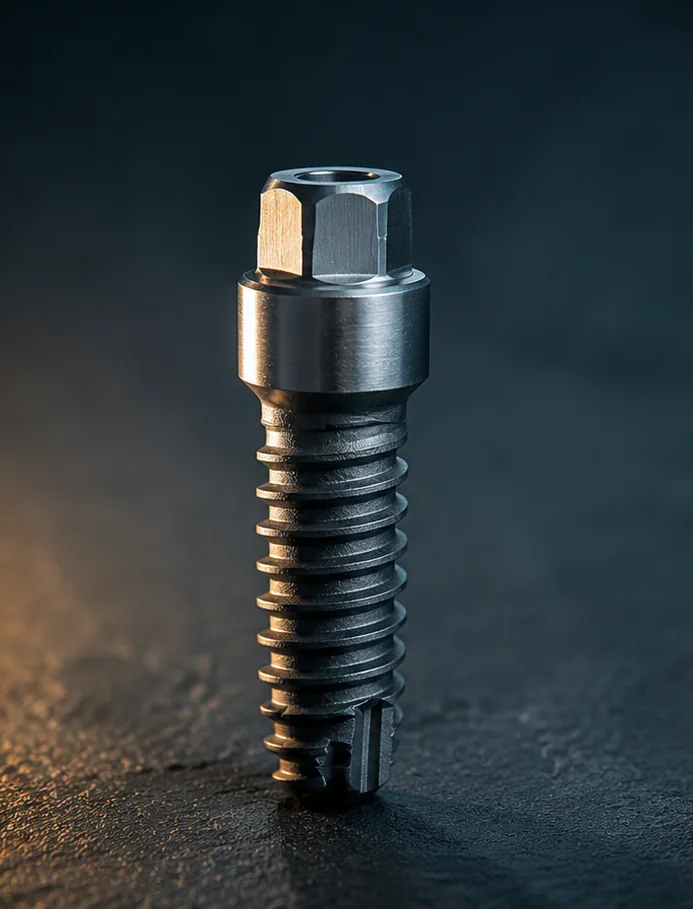
The two-trip rail
Consult and CT scan
A cone-beam scan measures bone height and width at the site, and shows where the nerve and sinus sit.
Day 1Implant placement
The titanium post is placed in the jaw and closed over. You fly home a few days later once the surgeon clears you.
Days 2–5Osseointegration
Bone grows onto the implant surface. Nothing to do but wait, and attend one check with a dentist at home if asked.
3–4 monthsAbutment and crown
The implant is uncovered, an abutment placed, impressions taken, and the final crown fitted before you fly out.
5–8 daysSingle implant: One missing tooth, healthy bone, no extraction needed.
Consult, CT, extractions
Remaining teeth are removed, implants placed the same day, and a fixed temporary bridge is screwed on before you leave.
Days 1–10Healing and soft diet
Gums remodel and bone integrates while you wear the temporary bridge. Soft foods for most of this period.
4–6 monthsFinal bridge fitted
New impressions, a try-in, then the definitive zirconia or acrylic bridge is fitted and adjusted.
7–12 daysAnnual maintenance
The bridge is removed and professionally cleaned roughly once a year — this can usually be done at home.
OngoingFull arch / All-on-4: A full upper or lower arch on four to six implants.
Consult, extraction, graft
The tooth comes out and graft material is packed into the socket, or a sinus lift is done in the upper jaw.
Days 1–4Graft maturation
Graft material has to turn into your own bone before anything can be anchored into it. This cannot be rushed.
4–6 monthsImplant placement
A second scan confirms the graft took, then the implant is placed.
Days 1–4Osseointegration
The standard integration wait, on top of the graft wait. This is why grafted cases become three-trip cases.
3–4 monthsAbutment and crown
Uncover, abutment, impressions, final crown.
5–8 daysWith bone graft: Not enough bone at the site — the most commonly underestimated path.
Gold markers are stages that happen in Medellín. Bone markers happen wherever you live. Durations are typical clinical ranges — your surgeon's plan is the one that counts.
What implant work costs in Medellín
Colombian implant pricing is usually quoted per component, not as one number. A "$900 implant" often means the post only — the abutment and crown are separate line items. Ask which of these three the quote covers.
| Line item | Medellín | Typical US range | What it covers |
|---|---|---|---|
| Implant post | $700–1,300 | $1,800–3,000 | The titanium fixture placed in the jaw. Brand matters — see below. |
| Abutment | $180–400 | $400–900 | The connector between post and crown. Frequently excluded from headline pricing. |
| Crown | $300–650 | $1,200–2,500 | The visible tooth. Zirconia typically sits at the top of the range. |
| Bone graft (socket) | $250–600 | $600–1,200 | Adds four to six months before the implant can be placed. |
| Sinus lift | $600–1,400 | $1,500–3,000 | Upper jaw only, where the sinus floor sits too low for a standard post. |
| Full arch, fixed (per arch) | $6,500–13,000 | $20,000–35,000 | Four to six implants plus a fixed bridge. Material choice drives the spread. |
| CBCT scan | $70–160 | $250–600 | Often waived or credited when treatment is booked. |
These are typical 2026 ranges compiled for planning purposes, not quotes, and not an offer of treatment. Add flights, lodging for two separate trips, and a contingency for the graft path. A single implant that needs a graft can cost more in total travel than in dentistry.
Three things that change your number of trips
Almost every unhappy implant tourism story traces back to one of these being discovered after arrival rather than before departure.
Whether you need a graft
If the tooth has been missing for years, the ridge has likely resorbed. A graft is not a delay of weeks — it is four to six months before an implant can even be placed, which turns a two-trip case into a three-trip case. Get a CBCT scan read before you buy a ticket.
Which system is being placed
Established systems have parts available worldwide, so a dentist at home can service the implant in ten years. Lesser-known systems can be excellent and much cheaper, but if the manufacturer disappears, a failed abutment becomes a much bigger problem. Ask for the brand and model in writing.
Your dentist at home
Someone local needs to check the site and handle an infection at 2am on a Tuesday. Ask your regular dentist before you travel whether they will see you for follow-up on work placed abroad. Some will not, and that is far better to know in advance.

Medellín is a practical base for a two-trip procedure
The reason to consider Medellín specifically is not that treatment is cheapest here — it often is not. It is that you have to come back, and coming back is easier from some places than others.
Direct service from several US hubs including Miami, Fort Lauderdale, Atlanta, New York and Houston. Two round trips from the eastern US remain manageable.
Colombia sits on Eastern Standard Time year-round. Post-operative check-in calls with a dentist at home happen during normal business hours for both of you.
Mild altitude with a steady climate. It is not a factor in dental recovery the way high-altitude cities can be for other procedures.
Colombia ranked first in the Western Hemisphere and 22nd globally in the World Health Organization's assessment published in its 2000 World Health Report. A national figure — verify your individual practitioner separately.
How to verify who is actually placing the implant
Colombia ranked first in the Western Hemisphere and 22nd globally in the World Health Organization's health system assessment published in its 2000 World Health Report. That is a statement about the national system — it tells you nothing about the individual holding the drill. Verify the person.
- Check ReTHUS, not the clinic's websiteReTHUS is Colombia's national registry of health practitioners. Every legitimately licensed dentist appears in it. Ask for the practitioner's full legal name and cédula number, then confirm the registration yourself rather than accepting a screenshot.
- Ask whether they are a specialist or a general dentistGeneral dentists place implants legally and often very well. But for full-arch cases, grafts, or sinus lifts, ask specifically about postgraduate training in oral surgery, periodontics, or implantology — and where it was completed.
- Be careful with accreditation claimsJCI accreditation is awarded to hospitals and health systems, not to standalone dental clinics or labs. A small clinic advertising itself as JCI accredited is misrepresenting something. Ask what body issued which certificate, and to whom.
- Get the treatment plan itemised in writing before you flyPost, abutment, crown, any graft, scan fees, and follow-up visits should each appear as a separate line with a price. A single bundled figure quoted over WhatsApp is not a treatment plan.
- Ask what happens if it failsImplant failure rates are low but not zero. Ask directly: if this implant fails in eighteen months, what does the clinic replace, and who pays for the flight back? Get the answer in writing.
What people ask before the first trip
Can this really be done in one trip?
Sometimes, and it depends entirely on your bone. Immediate-load protocols place the implant and a temporary tooth in the same visit, which is genuinely a single surgical trip — but you still return for the final restoration, and immediate loading requires enough healthy bone for the implant to be stable straight away. If a clinic promises one trip before seeing a scan, they are describing a sales process, not a treatment plan.
Is the second trip negotiable?
The waiting period is not — that is biology. What is sometimes negotiable is where the final crown gets fitted. Some patients have the implant placed in Medellín and the crown made by their dentist at home, which removes the second flight but usually costs more overall and requires the two dentists to agree on components in advance. Raise it before treatment starts, not after.
How long should I stay for the placement trip?
Plan a minimum of five days for a single implant and ten to fourteen for a full arch, and do not book a flight home the day after surgery. You want a buffer for swelling, a review appointment, and any adjustment. Medellín's altitude of roughly 1,500 metres is mild and is not typically a factor in recovery.
What about the language?
Many dentists working with international patients speak strong English, but the assistant taking your post-op instructions may not. Ask for written aftercare in English, and confirm who you contact after hours and in what language. This matters more than it sounds at the point when something hurts.
Do you arrange the treatment?
No. We publish independent guidance and can point you toward providers and comparison resources across our network. We are not a clinic, we do not perform treatment, and nothing here is dental advice. Decisions about your care belong to you and the practitioner you choose.
Have a scan or a quote already?
Send it over. We will tell you plainly which trip structure it implies and which line items are missing — and if the numbers do not favour travelling, we will say that too.